
Removing a tree often solves the biggest problem, but it leaves one thing behind: the stump.
An old tree stump can get in the way of mowing, landscaping, planting, or simply enjoying your yard. It may also become a tripping hazard or attract insects as the wood begins to decay.
For many homeowners, stump grinding in Middle Tennessee is the simplest way to deal with unwanted stumps without digging up a large section of the yard.
But how does stump grinding work? What happens to the roots? And what can you do with the area afterward?
At Arbor Best Tree Care, we’re here to help you understand what stump grinding is and how this service benefits property owners in Middle Tennessee.
What Is Stump Grinding?
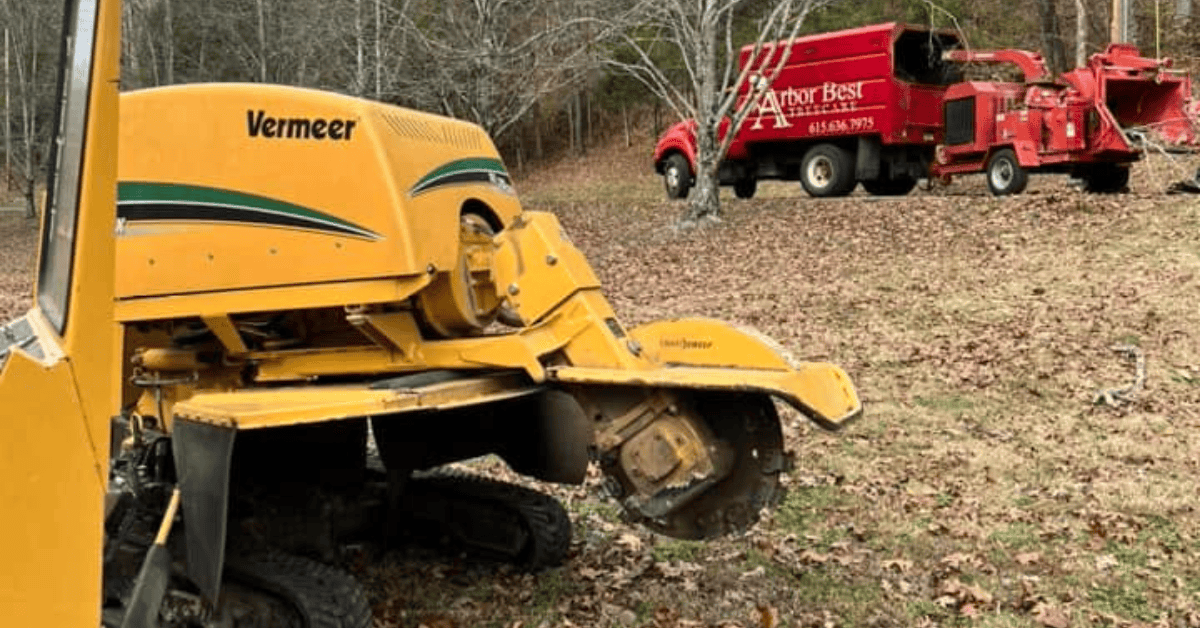
Stump grinding uses specialized equipment to grind a tree stump into small wood chips.
Instead of digging out the entire stump and its root system, a stump grinder removes the visible stump and grinds it below the surrounding ground level. This leaves the area much easier to restore, landscape, or maintain.
The depth of grinding varies depending on the stump, its location, and what you plan to do with the area afterward.
For example, preparing the spot for grass often requires a different approach than preparing it for a new landscaping project.
Why Remove an Old Tree Stump?
You don’t always have to remove a stump immediately after tree removal. However, leaving one in the yard can create several problems over time. Let’s take a closer look at some of the most common issues:
Stumps Get in the Way
A stump can make mowing and other lawn care harder. You have to mow around it, trim weeds growing beside it, and avoid hitting exposed wood or roots with your equipment.
Removing the stump creates a cleaner, more usable area.
Stumps Can Become Tripping Hazards
Low stumps are surprisingly easy to overlook, especially when grass or weeds grow around them.
That can make them a hazard for children, guests, pets, and anyone working in the yard.
Decaying Wood Attracts Insects
After a tree dies or is removed, its remaining wood slowly begins to break down.
Decaying stumps provide food or shelter for ants, beetles, termites, and other insects. Grinding the stump removes much of the dead wood above and immediately below the soil, preventing bugs from taking up residence.
Some Stumps Produce New Growth
Depending on the tree species and its condition, shoots may continue growing from the stump or remaining root system.
Grinding can help stop the stump from repeatedly sending up unwanted growth, although some species may continue producing root sprouts for a period of time.
Stumps Limit Your Landscaping Options
An old stump may sit exactly where you want a new flower bed, lawn area, patio, or other outdoor feature.
Grinding gives you more options for using the space.
Stump Grinding vs. Stump Removal
Although people sometimes use “stump grinding” and “stump removal” interchangeably, they actually describe two different processes.
Stump grinding removes the stump by mechanically grinding the wood into chips, usually below ground level. Much of the underground root system remains in place and gradually breaks down.
Stump removal involves digging or pulling out the stump along with a larger portion of the root system.
Complete stump and root removal typically disturbs a much larger area of the property, especially when removing a large tree. That’s one reason grinding is a popular choice for residential yards.
What Happens to Tree Roots After Stump Grinding?
One of the most common questions homeowners have is whether stump grinding removes the roots.
Usually, it does not remove the entire root system.
After the stump is ground, most roots remain underground. Without the tree, those roots gradually decay.
How long that process takes depends on the tree species, root size, soil conditions, moisture, and other factors.
This distinction matters when you have plans for the area. If you’re preparing for construction, excavation, or another project that requires the roots to be removed, tell your tree care company before the work begins.
Can You Plant a New Tree Where a Stump Was Ground?
You can sometimes plant near the location of an old stump, but planting a new tree directly in the same spot may not be the best choice.
Old roots and remaining wood take up space underground. As they decay, the soil can also settle.
If you want to replace a removed tree, consider planting the new tree a short distance from the old stump when space allows. The right location depends on the new tree species, mature size, available sunlight, drainage, utilities, structures, and other site conditions.
A tree care professional can help you evaluate the area before planting.
What Happens to the Wood Chips?
Stump grinding can produce a surprisingly large pile of wood chips mixed with soil.
Depending on the job, those chips may be removed, spread, or reused.
Clean wood chips sometimes work as mulch around established trees and landscaped areas. However, freshly ground stump material often contains soil and pieces of wood in different stages of decay, so it may not look like finished landscape mulch.
If you’re planning to grow grass over the old stump location, you’ll generally want to remove excess grinding debris and replace it with suitable soil before seeding.
What Should You Do After Stump Grinding?
What happens next depends on how you want to use the area.
If growing grass is your goal, it’s usually best to remove excess wood chips from the hole. Fill the area with clean soil, allow for some settling, and then prepare it for grass seed or sod.
For a landscaping bed, you have more flexibility. Some grinding debris can potentially be reused elsewhere as organic material.
Keep in mind that the ground may settle as remaining roots and wood decay. You may need to add soil later to keep the area level.
When Is the Best Time for Stump Grinding in Middle Tennessee?
Stump grinding can be performed during much of the year as long as site and ground conditions allow safe equipment access.
There isn’t one season that works for every property.
If you’re already having a tree removed, arranging stump grinding at the same time often makes sense. Doing so allows you to complete the work and start restoring the area sooner.
You may also want to schedule stump grinding before a major landscaping project so the old stump doesn’t interfere with your plans.
How Much Does Stump Grinding Cost in Middle Tennessee?
There isn’t one set price for stump grinding because every property and stump is different.
Several factors impact the price, including:
- Stump diameter and height
- Tree species and wood density
- Number of stumps
- Location and accessibility
- Nearby structures, fences, or landscaping
- Terrain and ground conditions
- Required grinding depth
- Surface roots
- Cleanup and debris removal
A small stump in an open front yard may be relatively straightforward. A large stump near a fence, building, slope, or other obstacle may require more time and care.
If you’re interested in stump grinding in Middle Tennessee, contacting us to request an estimate is the best way to determine the cost of your specific project.
Why Professional Stump Grinding Makes Sense
Stump grinders are powerful machines, and they’re safest when used by professionals. Operating one involves more than simply moving a cutting wheel across a stump.
Hidden rocks and other debris can become dangerous projectiles. Underground utilities can also create serious hazards.
Professional tree care crews know how to evaluate the work area, operate the equipment, control debris, and determine an appropriate grinding depth based on the property and the homeowner’s plans.
Choosing a professional Middle Tennessee tree service like Arbor Best Tree Care also saves you from renting, transporting, operating, and returning heavy equipment yourself.
Stump Grinding for Middle Tennessee Properties
Properties across Middle Tennessee can have very different stump grinding needs. A stump in an open rural yard presents different challenges than one in a developed neighborhood with fences, landscaping, driveways, utility lines, and limited equipment access.
That’s why the site matters as much as the stump itself.
Arbor Best Tree Care provides professional tree care services for property owners throughout Middle Tennessee. If you’ve recently removed a tree or have an old stump that has been sitting in your yard for years, we can help you determine the best way to handle it.
Frequently Asked Questions About Stump Grinding
How deep does stump grinding go?
Grinding depth varies based on the equipment, stump, site conditions, and your future plans for the area. If you have a specific project planned for the spot, discuss the required depth with your tree care company beforehand.
Does stump grinding remove all of the roots?
No. Standard stump grinding usually removes the stump and some wood below ground level while leaving much of the root system. The remaining roots gradually decay.
Will a tree grow back after stump grinding?
Most trees will not regrow once the stump is properly ground and the tree is no longer able to survive. However, some species can produce sprouts from remaining roots. Additional treatment or maintenance may be needed if this occurs.
Can I plant grass after stump grinding?
Yes. You’ll usually get better results by removing excess wood chips, adding suitable soil, leveling the area, and then planting grass seed or installing sod. Some settling may occur as underground roots decay.
Is it better to grind a stump or leave it?
If the stump doesn’t interfere with your property, you can leave it to decay naturally. Grinding makes sense when the stump creates a mowing obstacle, tripping hazard, landscaping problem, or unwanted feature in your yard.
Get Professional Stump Grinding in Middle Tennessee
A leftover stump doesn’t have to become a permanent part of your yard.
Professional stump grinding can clear the space, make lawn maintenance easier, reduce hazards, and give you more options for future landscaping.
If you need stump grinding in Middle Tennessee, contact Arbor Best Tree Care to request an estimate. Our team will evaluate the stump, its location, equipment access, and your plans for the area to recommend the right approach.